
The world's largest wetlands, Pantanal, with its amazing wildlife was on our list of things to see in South America from the start. Without even promising to buy any services from them, the chief guide of the Ecological tour picked us up from the bus station and took us to Campo Grande hostel (a double room 60 R, 27€). After a day of summer hat shopping, cold coconut juice and street barbeques, we booked an all including 4-day/3-night tour of the Pantanal for 350 R (159€) per person and got one of our nights at the hostel for free and a 10 R discount for the other one.

The first day went pretty much to travelling since the camp was right in the heart of the Pantanal and the only road to there was being fixed causing a few hours delay. Luckily an Irish girl from the same hostel, Eilis, was there to keep us company and is actually still travelling with us right now.

The camp was simple but nice, located on a river side about 25km off the main road. Sleeping options were hammocks in a shared room with plenty of mosquitoes or a tent with a thick mattress. Showers had hot water, filtered drinking water was cold, food was good and every time you went to the toilet you could discover a new kind of frog sitting in one of the corners.


The days consisted of a breakfast at 7am followed by morning activity from 7.30am to 11am, then returning to the camp for lunch and starting another activity at 2.30pm to finish just before dinner at 6pm.

We did a wet hike walking barefoot across the swamp, a boat ride on the river on a small motor boat, a night safari and a day jeep safari with way too many people on board, pirana fishing where a certain unnamed person from Eastern Finland got the first two fishes of the whole group, a dry hike in the forest and floated down the river on a rubber boat on our last day.

During the day when it got hot (+25-30 a guess) you could cool off by taking a swim in the river or have a cold beer watching the world cup. You can guess which one of those options sounded most appealing to me.


When the sun started setting at 5pm, the mosquitoes arrived. Or well, brought their friends, 'cause you actually got quite a few bites also during the day. There was no repellent that could keep them away and no clothes seemed to stop them. It felt like Lapland during the summer. After suffering both from the exhausting heat and the bloodthirsty mosquitoes for one night we moved from the hammocks to the tent where we could at least hunt and kill each and every one of these bloodthirsty females before turning in, which was around 9-10pm every night. (Both itching bites of who knows what and the sleeping habits of 80 year olds have followed us since then, for about two weeks now.)

Wildlife was everywhere around in Pantanal and here are a few of the lovely creatures we had the pleasure of meeting: howler monkeys, capybaras, deer, coatis, an armadillo, a fox, a lesser anteater and a giant river otter, as well as many storks (like this Pantanal symbol bird Jabiru), hawks, falcons, ibis, herons and hyacinth macaws.


After leaving the camp we took a bus to Curumba still being able to do some wildlife watching through its windows and stayed there in a disgusting El Shaddai hotel (25 R, 11€ per person) that we do not recommend to anyone wishing to maintain basic standards of cleanliness.

After spending the morning trying to get Erik a copy of his yellow fever certificate (which he left home together with his camera charger and cable, my precious bottle of English cider, etc.) faxed over from Sweden and failing in that, we decided to try to cross the border over to Bolivia anyway. That went well, but Eilis almost had to pay 75€ for losing her Brazil exit/entry form – if you're ever in Brazil and wish to return some day, don't lose it during your stay! We were stupid (or just felt rich) enough to take a taxi to the border for 30 R (14€), when there would've been a bus too for 2 R per person. The pretty much equally long taxi ride, about 5km, to our hostel on the Bolivian side varied from 9 to 35 bolivians (1-3,5€) for three people, less for fewer passengers.

Hostel is not really the right word to describe Resort Tamengo where we stayed in Quijarro; 'paradise' was the first one that came to my mind as we entered through the simple looking gates in a poor area close to the train station. The garden was full of beautiful palm trees and flowers, the water in the great big pool area looked blue and the hammocks in the shade beside it had an amazing view straight to the Pantanal. You could even see Curumbo in the horizon.

Eilis stayed alone in a dorm with 24 beds for 60 B (6€) and we took a private room with a/c for 240 B (24€) and absolutely LOVED the place. After two days of resting, relaxing and bit of shopping we were ready for the death train, Tren de la muerte. Having had huge big dinners and lunches for only about 1€ per person and hearing horror stories of the extremely uncomfortable 24h train journeys in the company of tons of mosquitoes, we opted for the 1 class of the best train, Ferrobus (13h, 260 B, 26€).
The cama (bed) compartment didn't contain any beds, just the Brazilian bus seats with leg support but a whole less space between the rows of seats. The dinner service that we were told was great wasn't really worth mentioning and the fact that the tables it was served from were kept on the floor of the train didn't make it any more appetising. It was incredible that any train ride could be as bumpy as this one was, but it getting really cold during the night was no news for anyone with experience in night travel in Latin America.
When we finally got to Santa Cruz the next morning, none of us felt like cruising around for a place to stay, but we simply took the first taxi to Tamengo's sister hostel Jodanga. The place was no paradise but nice enough (65Bv; 6,5€ per person) with plenty of information about the nearby area. After only one rather boring day of walking the streets of the not-Bolivian looking Santa Cruz, we took a taxi to Samaipata, a small village 2,5h drive away. Yeah, no kidding, a taxi. For 130Bv (13€) for all three of us.

The road was nightmarishly bumpy, but we made it and could not have been happier we took that trip as soon as we did. Our hotel, La Posada, offered beautiful rooms with total princess beds decorated with pretty mosquito nets (50Bv, 5€ per person) and served breakfast (according to Lonely Planet, the best one in Bolivia – possibly...) in their lovely garden with blue fronted Macaws.
.jpg)
It's not easy to point out exactly what made us all fall in love with Samaipata, meaning a resting place in the heights, but Eilis was the first one to declare it her new home after only two hours of street dog petting and a big portion of ice cream. Me and Erik promised we'd visit her often.

After a visit to the mouth wateringly colourful fruit and vegetable market Eilis convinced us she wasn't lying about having worked as a chef for many years by inviting us to a tasty dinner at the posada. And that was our first yummy vegetarian meal on this trip of many to come...

After turning down a guided trip to a nearby nature reserve Alboró, home the some of the last giant ferns in the world, we took a half day trip to El fuerte, an archeological site containing numerous ruins of past indigenous glory, most of them still uncovered due to lack of funding. Imagining how a place like this would be treated in any of our home countries made you once again realise how unfairly distributed the wealth is in the world; we use fortunes to preserve something created 50 years ago while here something 10 to 50 times older was being damaged under our very feet without even been completely discovered yet.


On Tuesday morning it was time for an early wakening at 5am to start our two day Che Guevara tour before the sunrise. I got out of my warm bed extremely reluctantly after Erik had insinuated that faking a stomach flu at this point would be very cool. Why Che Guevara? Hmm... I don't know how that happened exactly. During this whole trip the whole Che worship taking place everywhere in Latin America has pissed me off. Not because I'd have a political stand against him, but because I just don't like killing in general, even if it would be done in the name of freedom, and idolising anyone involved just doesn't feel quite right.

But when the guide, Rufo, came to our hotel on the night of our arrival talking about the natural beauty of the route the words great views, hot springs and camp fires made me think it could all just be worth the freezing cold night camping in the mountains, interpreting everything Rufo said from Spanish to English for the rest of the group and the measly 35€ he charged for the whole 2 day tour per person.

Looking back on the whole experience, I'm not sure if it was worth it. Maybe. If the funny Canadian dentists, Eilis and Erik would not have been there, I'd say no without a hesitation, but because of them, it was actually fun too. The views were undoubtably great the whole way, seeing a nearly untouched Inca burial site unforgettable and hundreds of butterflies buzzing above the narrow rivers dried by the dry winter season as we crossed them in Rufos car were pretty nice too.

But rest of it was basically, in one word, crap. Hours and hours of driving every day, shitty food (with the exception of marshmallows roasted on the bonfire) and listening and interpreting boring stories about Che's life, and especially his death, just wasn't my cup of tea. The exhausting and totally pointless hike up and down an extremely steep hill in the roasting afternoon sun just after a heavy lunch on the first day made me nauseous, teary and ready to take a taxi to Samaipata at that very second no matter the cost. The only thing stopping me was that it would've meant another bumpy 7 hour drive while as being able to rest at the camp was only an hour away.
So if you don't adore Che, like only one American girl in our group did – enough for all of us actually, and you don't speak Spanish, this is probably not the tour for you.

But just like all good things, all bad things come to an end too, and nothing could've felt sweeter than spending another night in the warm and comfy beds of the La Posada.

The next day was warm and sunny which made it a perfect one for a trip to the triple waterfalls only 20 minute taxi ride away from Samaipata. We enjoyed the refreshing natural showers and white sandy beach on the river side to the fullest and were only disturbed by some strange Mennonites waving us first to move away from our sun bathing spot because they didn't want us in their photo and then writing us a “I love Jesus” message in the sand, without saying a word to us the whole time.

We had bought the very last tickets to what we were told was the only bus to Sucre on the night but as we waited in the cold for our bus to show up, several other buses heading to the same city passed us by. When our bus finally showed up an hour late it was totally packed with not enough seats for everyone. There was no way in hell I was going to stand for the next 13 hours, so I loudly demanded to get the seats we had reserved and paid for or to let us get out of the bus right at that second. We got our seats and surprisingly they weren't too bad even though the bus was supposedly a second class one. All the second class meant in this case was that there was no air-conditioning and therefore the journey wouldn't have been as cold as the night buses usually are, if only some co-passangers didn't prefer fresh air at all costs by keeping their window open for hours as we drove up on freezing mountains. The only stops were a couple of smelly toilet breaks and when the bus needed repairs and the bus boys left their bunks in the luggage compartment at the side of the vehicle to get their hands dirty.
Now we're in Potosi and were in Sucre for a few days and I'd loved to tell you all about it, but due to bad wireless connections and some events, that are best not to be told first in a blog, you'll have to wait a few days.
Drinks, drinks, drinks...Our common favourite during this trip has without a doubt been coconut juice sold almost everywhere in Brazil. Erik's number 1 bevarage has of course been beer and I've had the pleasure of getting my favourite cocktail once - had to have three of them in an hour 'cause they seemed to disappear from the glass all too quickly. (2cl chocolate liquer, 2cl mint liquer and 1,5dl milk. If you love After Eight, watch out...)


The local drink we're not quite sure about is
suco/jugo de caña, sugar cane juice. Making it looks interesting, but the taste is extremely sweet, both in good and bad. In most places you could get the first cup for 3Bv (0,30€) and refills for free until your head starts to spin because of the amount of natural sugar.


 As soon as we hopped off the bus in Uyuni we were targeted by a half a dozen tour promoters who we turned down firmly to go search for a hotel room and make decisions later. Uyuni, located 3670m above sea level, is a town that exists for one purpose only: to accommodate the needs of the 60 000 tourists yearly visiting the world's largest salt flats, the Salar de Uyuni.


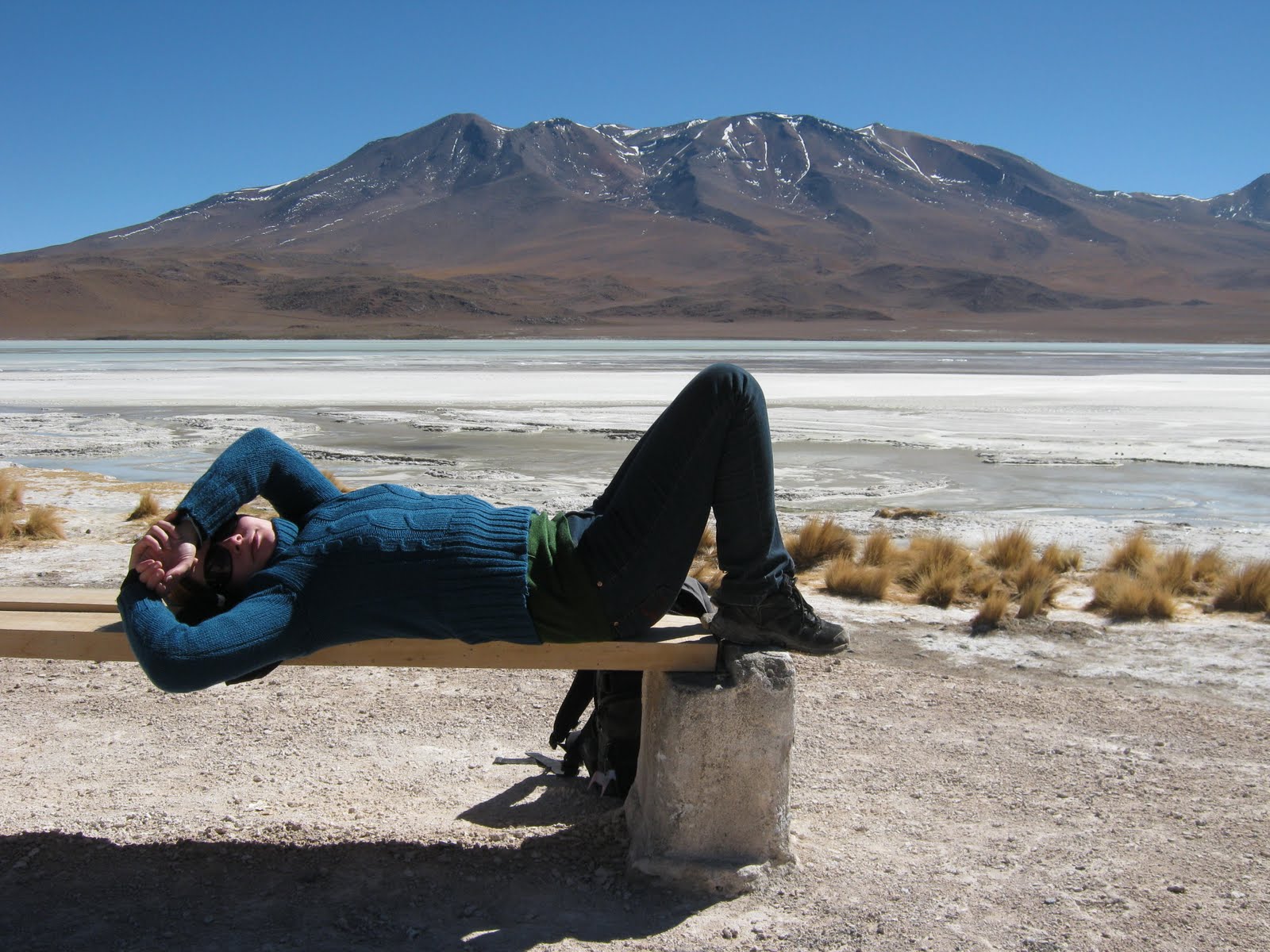


 The third morning in the cold desert came along as surely as they always do even though the amount of food I got in me over dinner the previous evening wasn't worth mentioning. We took off to the direction of Laguna Colorada just after 6am and no clothes nor blankets could keep us from freezing in the jeep in the -15c degrees that we were lucky to have – Waldo said it could've been -25c. We steam cleaned our shoes in geysers and Erik and Eilis skated on the (only 70% arsenic!) lake while I tried to stay on my feet for a few minutes before heading back to the jeep again.


.jpg)


